Blog
Sheet Metal vs Stainless Steel Fabrication: Which One Should You Choose?

Introduction
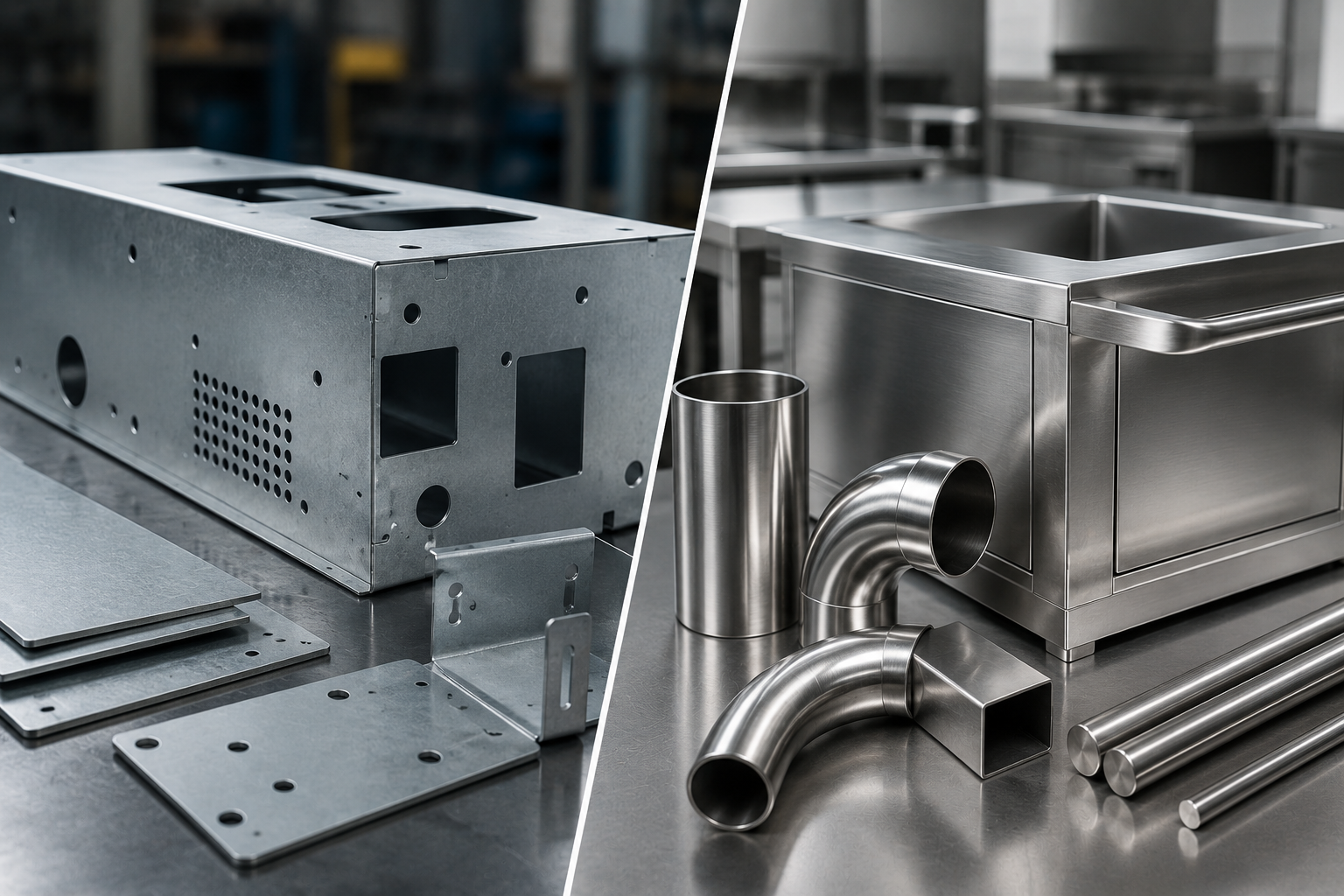
Choosing the right material is one of the most important decisions in any fabrication project. Businesses often compare sheet metal vs stainless steel fabrication to determine which option offers better durability, cost efficiency, and performance for their specific application.
Both fabrication methods are widely used across industries such as manufacturing, construction, healthcare, automotive, and commercial interiors. However, each material comes with unique properties, advantages, and limitations.
In this guide, we’ll explain the differences between sheet metal and stainless steel fabrication, their benefits, applications, and how to choose the right option for your business needs.
What is Sheet Metal Fabrication?
Sheet metal fabrication is the process of cutting, bending, and assembling thin metal sheets into finished products or components.
Common materials used include:
- Mild steel
- Aluminum
- Galvanized steel
- Copper
This fabrication method is widely used for:
- Industrial enclosures
- Storage systems
- Office furniture
- Automotive parts
It is known for flexibility, affordability, and large-scale production capability.
What is Stainless Steel Fabrication?
Stainless steel fabrication specifically uses stainless steel alloys to manufacture products with high corrosion resistance and durability.
It is commonly used in:
- Healthcare equipment
- Commercial kitchens
- Food processing industries
- Architectural applications
Stainless steel fabrication is preferred in environments where hygiene, moisture resistance, and long-term durability are essential.
Sheet Metal vs Stainless Steel Fabrication: Key Differences
1. Material Composition
Sheet Metal Fabrication
Uses a variety of metals such as:
- Mild steel
- Aluminum
- Copper
Stainless Steel Fabrication
Uses chromium-rich stainless steel alloys that resist corrosion and rust.
2. Durability
Sheet Metal
Offers good strength and durability for general industrial and commercial applications.
Stainless Steel
Provides superior resistance to:
- Corrosion
- Heat
- Moisture
- Chemicals
Stainless steel is more durable in harsh environments.
3. Cost Comparison
Sheet Metal Fabrication
Generally more affordable and cost-effective for bulk manufacturing.
Stainless Steel Fabrication
Usually more expensive due to:
- Material cost
- Specialized processing
- Finishing requirements
Sheet metal is better for budget-conscious projects.
4. Appearance & Finish
Sheet Metal
Can be painted or powder-coated for improved aesthetics.
Stainless Steel
Naturally offers a sleek, polished, and premium appearance.
Stainless steel is ideal for modern commercial and architectural projects.
5. Maintenance Requirements
Sheet Metal
May require regular maintenance depending on environmental exposure.
Stainless Steel
Requires minimal maintenance and is highly resistant to staining and corrosion.
6. Weight & Flexibility
Sheet Metal
Lighter materials like aluminum provide flexibility and easier handling.
Stainless Steel
Heavier but stronger, making it suitable for high-performance applications.
Applications of Sheet Metal Fabrication
Sheet metal fabrication is commonly used for:
- Industrial storage systems
- Office furniture
- Retail display units
- Electrical enclosures
- Automotive components
It is suitable for projects requiring cost-effective and scalable production.
Applications of Stainless Steel Fabrication
Stainless steel fabrication is preferred for:
- Commercial kitchen equipment
- Hospital furniture
- Food processing systems
- Architectural railings
- Pharmaceutical equipment
It is ideal for industries requiring hygiene and corrosion resistance.
Advantages of Sheet Metal Fabrication
Affordable Production
Suitable for large-scale manufacturing with controlled costs.
Versatility
Can be used across multiple industries and applications.
Easy Customization
Supports flexible designs and fabrication requirements.
Lightweight Options
Materials like aluminum reduce overall product weight.
Advantages of Stainless Steel Fabrication
Corrosion Resistance
Performs well in humid and chemical environments.
Long-Term Durability
Offers excellent lifespan with minimal maintenance.
Hygienic Surface
Easy to clean, making it ideal for healthcare and food industries.
Premium Appearance
Provides a modern and polished finish.
Which One Should You Choose?
The right choice depends on your project requirements.
Choose Sheet Metal Fabrication If:
- You need cost-effective production
- Your project requires flexibility and scalability
- The application is industrial or commercial with moderate environmental exposure
Choose Stainless Steel Fabrication If:
- You need high corrosion resistance
- Hygiene and cleanliness are critical
- You want a premium, long-lasting finish
Understanding your industry needs, budget, and environmental conditions will help you make the best decision.
Final Thoughts
When comparing sheet metal vs stainless steel fabrication, there is no one-size-fits-all solution. Both options offer unique advantages depending on the application, environment, and budget.
Sheet metal fabrication is ideal for cost-effective, scalable, and versatile manufacturing needs, while stainless steel fabrication provides superior durability, corrosion resistance, and premium aesthetics.
Choosing the right fabrication solution ensures better performance, long-term value, and improved operational efficiency for your business.
FAQs
1. What is the difference between sheet metal and stainless steel fabrication?
Sheet metal fabrication uses various metals like mild steel and aluminum, while stainless steel fabrication specifically uses corrosion-resistant stainless steel alloys.
2. Which is more durable: sheet metal or stainless steel?
Stainless steel is generally more durable due to its superior resistance to corrosion, heat, and moisture.
3. Is stainless steel fabrication more expensive?
Yes, stainless steel fabrication usually costs more because of higher material and processing expenses.
4. Where is sheet metal fabrication commonly used?
It is commonly used in industrial equipment, office furniture, automotive components, and electrical enclosures.
5. Which fabrication method is better for commercial kitchens?
Stainless steel fabrication is better for commercial kitchens because it is hygienic, corrosion-resistant, and easy to maintain.