Blog
Sheet Metal vs Stainless Steel Fabrication: Which is Better for Your Project?

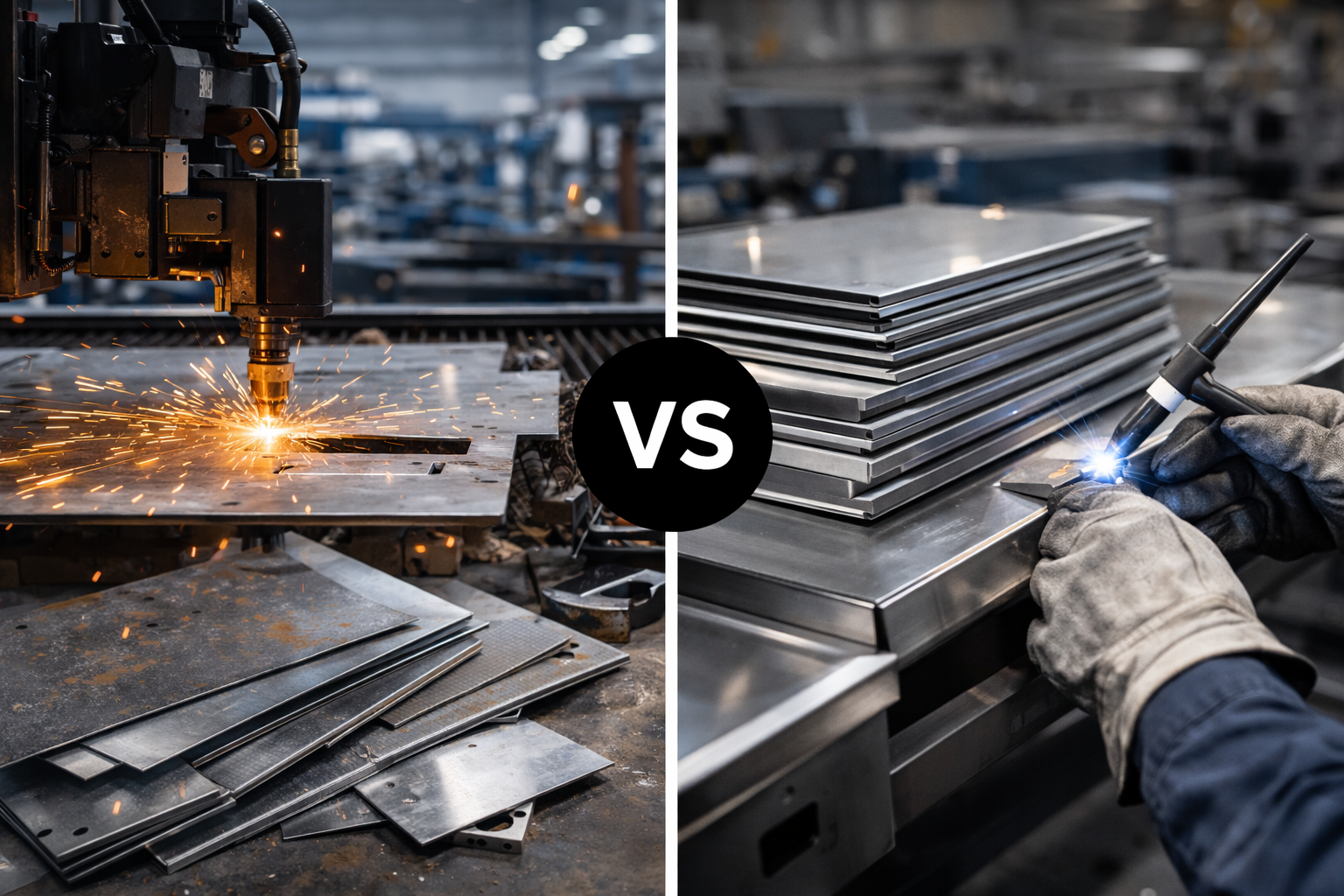
What Is the Difference Between Sheet Metal and Stainless Steel Fabrication?
Sheet metal fabrication refers to the process of shaping thin metal sheets (such as mild steel, aluminum, or brass) into products, while stainless steel fabrication specifically uses stainless steel—a corrosion-resistant alloy known for strength and durability. The choice depends on your project’s requirements, budget, and environment.
Introduction
When planning an industrial or commercial project, selecting the right material is critical. One common dilemma businesses face is choosing between general sheet metal fabrication and stainless steel fabrication. While both involve similar processes like cutting, bending, and welding, the materials used and their performance characteristics differ significantly.
Understanding these differences helps you make informed decisions based on durability, cost, application, and long-term value. In this guide, we compare sheet metal vs stainless steel fabrication to help you determine which option is best suited for your project.
What Is Sheet Metal Fabrication?
Sheet metal fabrication involves transforming flat metal sheets into finished products using processes such as:
- Laser cutting
- CNC punching
- Bending and forming
- Welding and assembly
Materials commonly used:
- Mild steel
- Aluminum
- Brass
- Galvanized steel
It is widely used for:
- Industrial enclosures
- Furniture
- HVAC systems
- Storage units
What Is Stainless Steel Fabrication?
Stainless steel fabrication focuses specifically on stainless steel, an alloy known for its corrosion resistance and high strength.
Key features:
- Contains chromium for rust resistance
- Smooth, polished finish
- Suitable for hygienic environments
Common applications:
- Commercial kitchens
- Medical equipment
- Food processing units
- Architectural structures
Sheet Metal vs Stainless Steel Fabrication: What Are the Key Differences?
1. Material Composition
- Sheet Metal Fabrication: Uses a variety of metals
- Stainless Steel Fabrication: Uses only stainless steel
This makes sheet metal more versatile, while stainless steel is more specialized.
2. Durability and Strength
- Stainless steel offers superior strength and corrosion resistance
- General sheet metal varies depending on the material used
For harsh environments, stainless steel is the better choice.
3. Cost Comparison
- Sheet metal fabrication is generally more cost-effective
- Stainless steel fabrication is more expensive due to material and processing costs
Best choice depends on your budget and project lifespan.
Which Option Is Better for Different Applications?
4. Indoor vs Outdoor Use
- Indoor Applications: Sheet metal (cost-effective and sufficient)
- Outdoor or Humid Environments: Stainless steel (resistant to rust and weather)
5. Hygiene-Sensitive Industries
Stainless steel is the preferred choice for industries requiring strict hygiene standards.
Examples:
- Hospitals
- Food processing
- Pharmaceutical units
6. Aesthetic Requirements
- Stainless steel offers a premium, polished look
- Sheet metal can be coated or painted for customization
Choose based on design and visual appeal.
What Are the Advantages of Sheet Metal Fabrication?
7. Cost Efficiency
Sheet metal is ideal for projects with budget constraints.
8. Design Flexibility
It allows for a wide range of materials and finishes.
9. Lightweight Options
Materials like aluminum make sheet metal suitable for lightweight applications.
What Are the Advantages of Stainless Steel Fabrication?
10. Corrosion Resistance
Stainless steel does not rust easily, making it perfect for long-term use.
11. High Strength and Durability
It can withstand heavy loads and extreme conditions.
12. Low Maintenance
Requires minimal upkeep compared to other metals.
How to Choose Between Sheet Metal and Stainless Steel Fabrication?
13. Consider Your Project Environment
- Dry indoor spaces → Sheet metal
- Moist or outdoor areas → Stainless steel
14. Evaluate Budget vs Longevity
- Short-term projects → Sheet metal
- Long-term investment → Stainless steel
15. Analyze Industry Requirements
Some industries mandate the use of stainless steel due to safety and hygiene standards.
16. Check Maintenance Needs
If you want minimal maintenance, stainless steel is the better option.
Common Mistakes to Avoid
17. Choosing Based Only on Cost
Low initial cost may lead to higher maintenance expenses later.
18. Ignoring Environmental Factors
Exposure to moisture and chemicals can damage non-stainless materials.
19. Overlooking Design Requirements
Material choice should align with both function and aesthetics.
Final Thoughts
When comparing sheet metal vs stainless steel fabrication, there is no one-size-fits-all answer. The right choice depends on your project’s specific needs, including environment, budget, durability, and application.
Sheet metal fabrication is ideal for cost-effective, flexible, and indoor applications, while stainless steel fabrication excels in durability, corrosion resistance, and hygiene-critical environments. By carefully evaluating your requirements, you can select the most suitable option that delivers both performance and value.
Making the right material choice is not just a technical decision—it’s a strategic investment that impacts the longevity and success of your project.
FAQs
1. Which is more durable: sheet metal or stainless steel?
Stainless steel is generally more durable due to its corrosion resistance and strength.
2. Is stainless steel fabrication more expensive?
Yes, it typically costs more due to material quality and processing requirements.
3. Can sheet metal be used outdoors?
Yes, but it may require protective coatings to prevent rust and damage.
4. Which is better for kitchens: sheet metal or stainless steel?
Stainless steel is the preferred choice for kitchens due to hygiene and corrosion resistance.
5. Is sheet metal fabrication suitable for industrial use?
Yes, it is widely used in industrial applications, depending on the material selected.