Blog
Custom Sheet Metal Fabrication Services: A Complete Guide for B2B Buyers

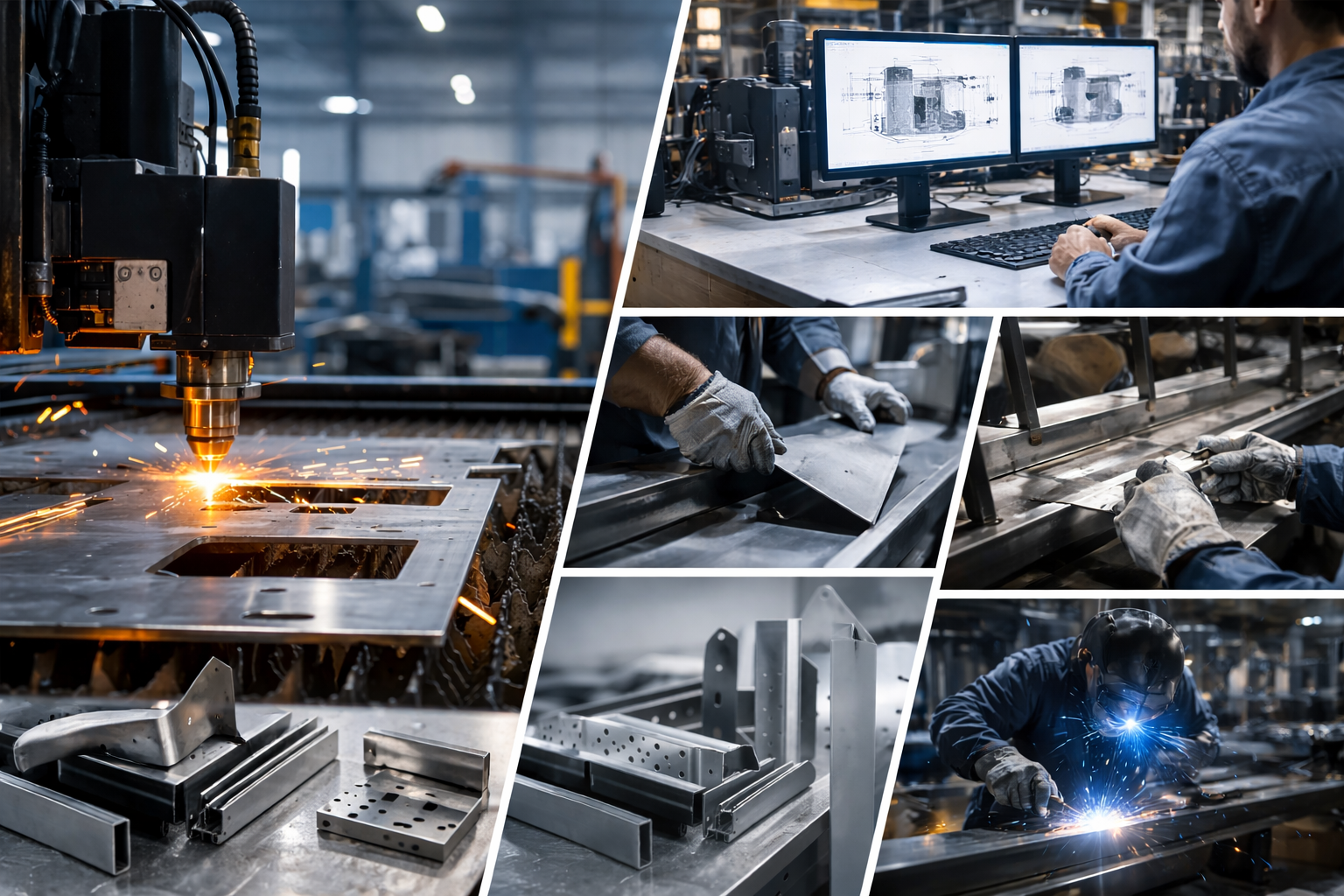
Custom sheet metal fabrication services involve designing, cutting, bending, and assembling metal sheets into tailored products based on specific business requirements. These services are widely used across industries to create precision components, enclosures, furniture, and structural systems with high accuracy and durability.
Introduction
In today’s competitive industrial environment, businesses require highly customized solutions to meet unique operational needs. Standard, off-the-shelf products often fail to deliver the flexibility and precision required for modern applications. This is where custom sheet metal fabrication services play a crucial role.
From small-scale prototypes to large-volume production, these services enable businesses to design and manufacture components that perfectly match their specifications. Whether you are in manufacturing, construction, healthcare, or IT infrastructure, partnering with the right fabrication company can significantly improve efficiency, quality, and cost-effectiveness.
This guide will help B2B buyers understand the process, benefits, and key factors to consider when choosing custom sheet metal fabrication services.
Why Do Businesses Need Custom Sheet Metal Fabrication Services?
1. Tailored Solutions for Unique Requirements
Every business has different needs, and custom fabrication ensures that products are designed specifically for your application.
Examples include:
- Server racks and IT enclosures
- Industrial cabinets and storage systems
- Machine components and panels
- Commercial furniture
2. Improved Operational Efficiency
Custom-designed components fit perfectly into your systems, reducing installation time and operational inefficiencies.
Benefits include:
- Better space utilization
- Reduced assembly issues
- Enhanced workflow productivity
How Does the Custom Sheet Metal Fabrication Process Work?
3. Design and Engineering
The process begins with detailed design and engineering. Fabricators use CAD software to create precise models and ensure the product meets all functional requirements.
4. Material Selection
Choosing the right material is critical for performance and durability.
Common materials:
- Stainless steel
- Mild steel
- Aluminum
- Brass
5. Cutting and Shaping
Advanced machines are used to cut and shape metal sheets with high precision.
Techniques include:
- Laser cutting
- CNC punching
- Shearing
6. Bending and Forming
Metal sheets are bent into required shapes using press brakes and automated systems.
7. Welding and Assembly
Components are joined together through welding or fastening techniques to form the final structure.
8. Finishing and Coating
Surface finishing enhances durability and appearance.
Options include:
- Powder coating
- Polishing
- Galvanizing
What Are the Benefits of Custom Sheet Metal Fabrication Services?
9. High Precision and Quality
Professional fabrication companies use advanced technology to ensure accuracy and consistency.
Result:
- Minimal errors
- Superior product quality
10. Cost-Effective in the Long Run
Custom fabrication reduces waste, rework, and maintenance costs. Though initial costs may be higher, long-term savings are significant.
11. Scalability for Bulk Production
Fabrication services can scale from prototypes to mass production without compromising quality.
12. Design Flexibility
Custom fabrication allows businesses to experiment with innovative designs and modifications.
What Industries Use Custom Sheet Metal Fabrication Services?
13. Manufacturing and Engineering
Used for machine parts, equipment enclosures, and production components.
14. IT and Data Centers
Essential for:
- Server racks
- Data cabinets
- Network enclosures
15. Healthcare Sector
Used in:
- Hospital furniture
- Medical equipment structures
16. Retail and Commercial Spaces
Applications include:
- Display racks
- Storage units
- Modular furniture
How to Choose the Right Custom Sheet Metal Fabrication Services?
17. Evaluate Experience and Expertise
Choose a company with proven industry experience and a strong portfolio.
18. Check Technology and Capabilities
Ensure the company uses modern machinery and follows efficient processes.
19. Assess Customization Options
The ability to offer tailored solutions is crucial for B2B requirements.
20. Review Quality Standards
Look for certifications and quality assurance processes.
21. Compare Pricing and Lead Time
Balance cost with quality and delivery timelines to ensure project success.
Common Challenges in Custom Fabrication and How to Overcome Them
22. Design Complexity
Solution: Work with experienced engineers for optimized designs.
23. Material Selection Issues
Solution: Consult experts to choose the right material for your application.
24. Production Delays
Solution: Partner with reliable manufacturers with proven delivery records.
Final Thoughts
Custom sheet metal fabrication services are essential for businesses seeking precision, flexibility, and efficiency in their operations. From tailored designs and high-quality materials to scalable production and long-term cost savings, these services offer unmatched value for B2B buyers.
Choosing the right fabrication partner is the key to success. By evaluating expertise, technology, and quality standards, businesses can ensure they receive reliable and high-performance solutions tailored to their needs.
In a rapidly evolving industrial landscape, investing in custom sheet metal fabrication services is not just a necessity—it’s a strategic advantage.
FAQs
1. What are custom sheet metal fabrication services used for?
They are used to create customized metal components, enclosures, furniture, and industrial structures for various industries.
2. How long does the fabrication process take?
The timeline depends on design complexity, quantity, and finishing requirements.
3. Is custom fabrication expensive?
It may have higher initial costs but offers better long-term value through durability and efficiency.
4. Can fabrication services handle bulk orders?
Yes, most professional companies can scale production from prototypes to large volumes.
5. What materials are best for sheet metal fabrication?
Common materials include stainless steel, aluminum, mild steel, and brass, depending on the application.