Blog
Mild Steel vs Stainless Steel: Which Material Suits Your Project?

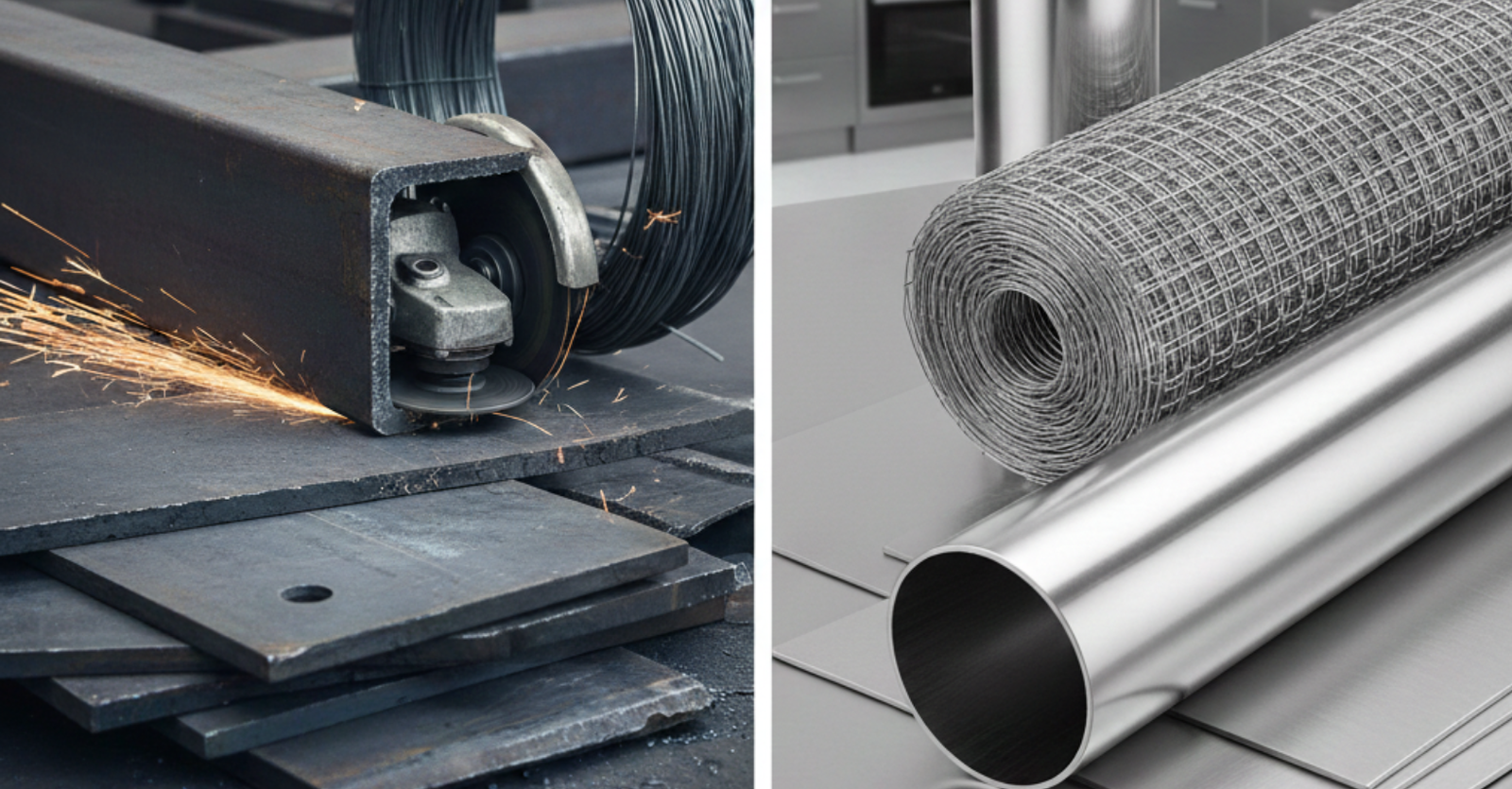
Choosing the right metal is a critical decision in fabrication and manufacturing. Among the most commonly used materials, mild steel and stainless steel serve very different purposes depending on strength requirements, environment, budget, and finish. Understanding the difference between mild steel vs stainless steel will help you select the material that best suits your project.
What Is Mild Steel?
Mild steel, also known as low carbon steel, contains a small percentage of carbon. It is widely used in structural, industrial, and commercial applications due to its strength, ease of fabrication, and cost-effectiveness.
Key Characteristics of Mild Steel:
- High tensile strength
- Easy to weld, cut, and form
- Cost-effective for large projects
- Requires surface treatment to prevent corrosion
Mild steel is commonly used in industrial furniture, storage racks, structural frames, cabinets, and enclosures used in controlled environments.
What Is Stainless Steel?
Stainless steel contains chromium, which gives it excellent corrosion resistance and a clean, modern appearance. It is preferred in applications where hygiene, aesthetics, and exposure to moisture or chemicals are major concerns.
Key Characteristics of Stainless Steel:
- High resistance to rust and corrosion
- Hygienic and easy to clean
- Attractive surface finish
- Higher cost compared to mild steel
Stainless steel is widely used in hospitals, laboratories, commercial kitchens, food processing units, and outdoor installations.
Mild Steel vs Stainless Steel: Key Differences
1. Strength & Durability
Both materials are strong, but mild steel offers better structural strength for heavy-duty applications. Stainless steel excels in durability when exposed to moisture and corrosive environments.
2. Corrosion Resistance
Stainless steel naturally resists corrosion, while mild steel needs powder coating, painting, or galvanization for protection.
3. Cost Comparison
Mild steel is significantly more affordable and suitable for large-scale projects. Stainless steel has a higher initial cost but lower maintenance in corrosive environments.
4. Fabrication & Customization
Mild steel is easier to fabricate, making it ideal for custom metal fabrication. Stainless steel requires specialized tools and skilled workmanship.
5. Appearance & Finish
Stainless steel provides a premium, polished look. Mild steel can achieve a clean finish through powder coating but does not match stainless steel’s natural shine.
When to Choose Mild Steel?
Mild steel is the right choice when:
- The project requires high strength and load-bearing capacity
- Budget optimization is important
- The environment is dry or controlled
- Products will be powder-coated or painted
When to Choose Stainless Steel?
Stainless steel is suitable when:
- Corrosion resistance is critical
- Hygiene and cleanliness are mandatory
- The product is exposed to moisture or chemicals
- A premium finish is required
Final Thoughts
The choice between mild steel vs stainless steel depends entirely on your project’s functional needs, environment, and budget. Mild steel is ideal for strength-focused, cost-sensitive projects, while stainless steel is the preferred option for corrosion resistance, hygiene, and aesthetics.
Consulting an experienced fabrication partner ensures you select the right material and achieve long-term performance and reliability.
FAQs
1. Which is cheaper: mild steel or stainless steel?
Mild steel is more affordable and suitable for bulk and large-scale projects.
2. Does mild steel rust easily?
Yes, unless it is powder-coated, painted, or galvanized.
3. Is stainless steel stronger than mild steel?
Mild steel generally offers better structural strength, while stainless steel excels in corrosion resistance.
4. Which material is better for outdoor use?
Stainless steel is better suited for outdoor and high-moisture environments.
5. Can both materials be custom-fabricated?
Yes, both mild steel and stainless steel can be custom-fabricated based on project requirements.