Blog
MS, Stainless Steel or Aluminium: Choosing the Right Fabrication Material

Metal Fabrication
From Drawing to Delivery: The Custom Sheet Metal Fabrication Process
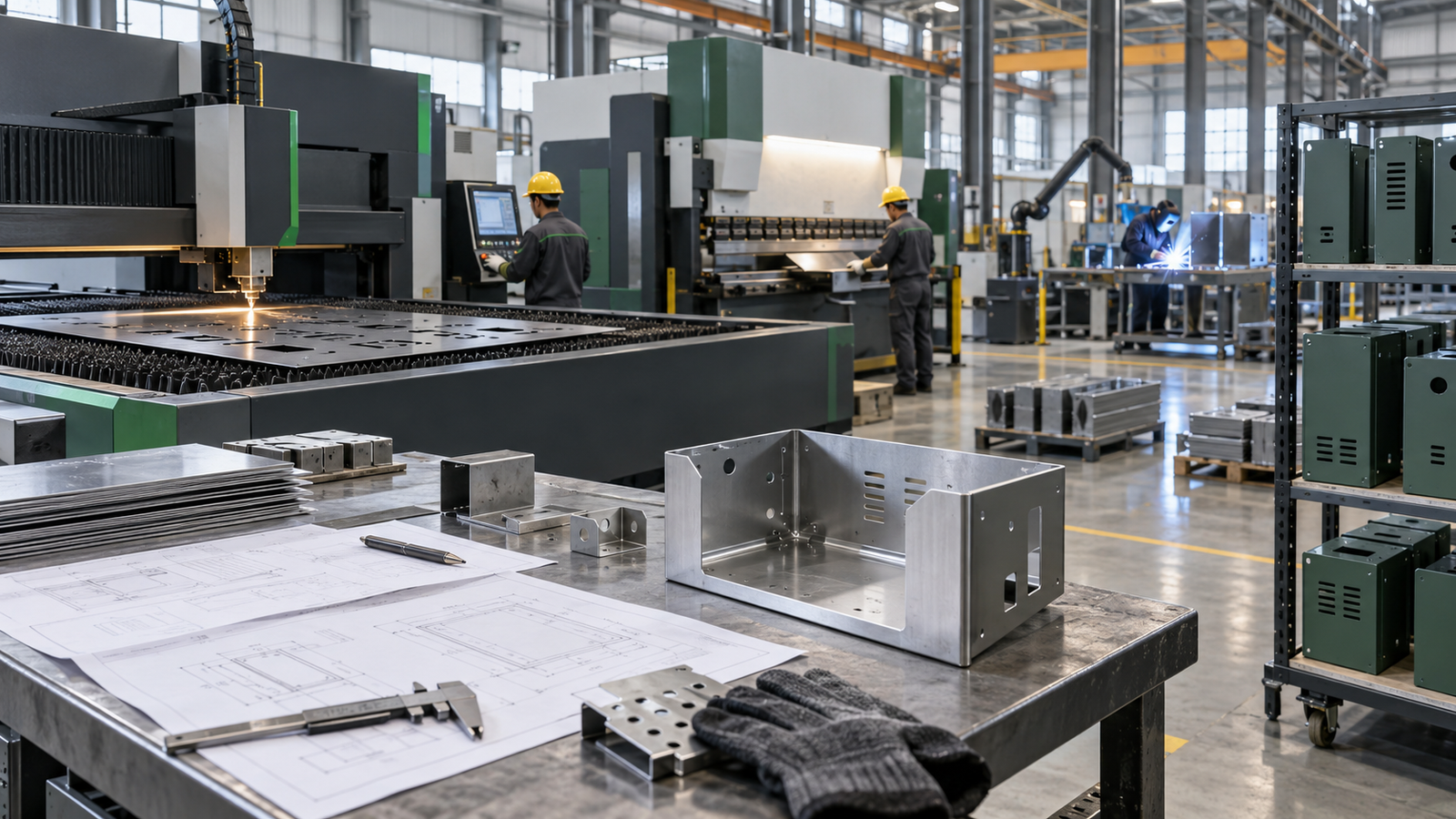
A finished metal enclosure, furniture frame, storage cabinet or project assembly may look simple, but dependable results require careful decisions at every stage. A structured fabrication process converts an idea or technical drawing into a product that can be manufactured consistently, assembled correctly and delivered ready for its intended use.

1. Requirement Discovery
The process begins by understanding what the product must do. A fabricator needs more than its overall appearance. Important inputs include the application, installation location, quantity, expected load, environment, equipment housed inside, maintenance access, desired finish and delivery schedule.
Reference images can communicate an idea, but production normally requires dimensions or drawings. For an enclosure, confirm internal components, ventilation, cable entry and service doors. For furniture, define user needs, working heights, storage and daily usage. For a frame or assembly, identify mounting points and interfaces with other parts.
2. Drawing Review and Design for Manufacturing
Client, architect or OEM drawings are reviewed to check whether the design can be produced efficiently and assembled as intended. This stage is often called design for manufacturing.
The review may consider bend allowances, tool access, weld locations, fastener clearance, panel joints, tolerances, material utilisation and finishing access. Small changes at this point can reduce fabrication complexity without changing the product’s function or visual intent.
Any proposed revision should be documented and approved before production. A controlled drawing revision prevents different teams from working from different versions.
3. Selecting the Right Material
The material should be selected according to performance, environment, appearance, weight and budget. Common options include:
- Mild steel: widely used for furniture frames, racks, cabinets, enclosures and indoor project assemblies because it offers strength and fabrication flexibility.
- Stainless steel: considered for applications requiring moisture resistance, easy-clean surfaces or a specialised exposed-metal appearance.
- Aluminium: useful where lower weight, corrosion resistance or specific profile and panel requirements are important.
- Bright steel and brass: selected for specialised components, precision requirements or decorative architectural applications.
Grade, thickness and finish must also be defined. Selecting material only by name is not enough; the final specification should match the product’s load, process and service conditions.
4. Prototyping and Sample Approval
For a new design or bulk requirement, a prototype can reveal issues that may not be obvious in a drawing. It allows the buyer and manufacturer to review dimensions, assembly, access, stability, appearance and finish before scaling production.
Feedback should be consolidated into one approved revision. Once the sample is signed off, it becomes the physical and technical reference for the production batch.
5. Cutting and Part Preparation
Approved drawings are converted into individual components. Sheet-metal parts may require precision cutting, holes, slots, notches or openings for fasteners, ventilation, wiring and hardware.
Efficient nesting can reduce material waste, while clear part identification helps organise downstream operations. Cut edges are checked and prepared before bending or assembly. Where tubes or pipes are included, their length, angle and end preparation must match the approved design.
6. Bending and Forming
Flat sheet components are formed into panels, channels, trays, brackets and enclosures. Accurate bends depend on material type, thickness, bend radius and tooling.
The bending sequence matters because one fold can affect access for the next. First-piece inspection is useful for confirming critical dimensions and angles before the complete batch is formed.
7. Welding, Fastening and Assembly
Components are joined according to the design. The correct method depends on the material, load, appearance and whether the product needs to be permanent, serviceable or flat-packed.
Weld location and sequence should control distortion while maintaining strength. Visible joints may require dressing and finishing. Fasteners, hinges, locks, drawer slides, levellers and other hardware are fitted and checked for smooth operation.
8. Surface Preparation and Finishing
A durable finish depends on good surface preparation. Parts should be cleaned and prepared so the selected coating or final finish can perform consistently.
Powder coating is commonly used for mild-steel furniture, cabinets, racks and enclosures because it provides a uniform colour and practical indoor-use finish. Stainless steel, aluminium, bright steel and brass may require different finishing processes depending on the desired appearance and application.
Colour, texture, gloss level and exposed surface requirements should be approved before finishing begins.
9. Quality Inspection
Inspection should compare the product against approved drawings and samples. Depending on the project, checks may include:
- Overall and critical dimensions
- Hole, slot and mounting-point positions
- Bend angles and panel alignment
- Weld quality and joint finishing
- Stability, fit and assembly
- Door, drawer, hinge and lock operation
- Surface preparation, colour and coating consistency
- Quantity, accessories and identification
Quality control is most effective when acceptance criteria are agreed before production rather than judged only at dispatch.
10. Packing, Dispatch and Delivery
Finished components must be protected during handling and transport. Packaging should consider exposed corners, painted surfaces, glass or electronic components, loose accessories and the stacking limitations of the product.
For project deliveries, items can be grouped or labelled by building, floor, room or installation sequence. This makes unloading and site distribution easier and reduces the risk of components being separated from their assemblies.
Information to Share with a Fabrication Partner
- Application and installation environment
- Dimensioned drawings or reference design
- Material, grade and thickness, if already specified
- Quantity and repeat-order expectations
- Load, mounting and equipment details
- Finish, colour and appearance requirements
- Sample or prototype requirement
- Quality and tolerance expectations
- Assembly, packing and delivery scope
- Project location and required timeline
Why an Integrated Fabrication Partner Adds Value
When design review, fabrication, finishing and assembly are coordinated under one project workflow, communication becomes clearer and quality is easier to control. It also allows design decisions to account for real manufacturing conditions early in the project.
Kalina supports custom sheet and pipe metal fabrication for commercial, industrial and institutional applications. Its capabilities cover furniture, racks, cabinets, enclosures, kiosks and project-based assemblies in mild steel, stainless steel, aluminium and other specialised materials.
Frequently Asked Questions
Can fabrication be completed from an architect or OEM drawing?
Yes. A fabricator can review client-supplied drawings, identify manufacturing considerations and produce according to the approved revision.
Is a prototype necessary for every project?
Not always, but it is valuable for new, complex or high-volume products because it confirms the design before full production.
Which material is best for a custom fabrication project?
There is no single best material. The correct choice depends on the environment, strength, weight, appearance, maintenance, quantity and budget.